Check-in is always a bit of a blur.
We point to the map. We give a few tips. Guests nod, half-listening, half-dreaming of a cold drink or a shower. Some info sticks. Most of it floats away. Fair enough — it’s been a long journey.
So this time, no front desk, no rush. Just a little space to tell you more about the island that many of us call home.
The Names Behind the Villages
Don Daeng has two main villages — each with a story in its name.
One is named after the monk who founded it. He arrived, built a temple, and little by little, a village formed around it. His name lives on.
The other village is simply… hidden. Tucked behind a dune, invisible from the river. Locals called it the hidden village. Not poetic, perhaps — but accurate. And no, it’s not a secret ninja base. Just a quiet little place where life hums along, half out of view.
Even geography, it seems, has a sense of humor here.
So How Big Is It?
Don Daeng is around nine kilometers long and three wide — though the Mekong has its own ideas.
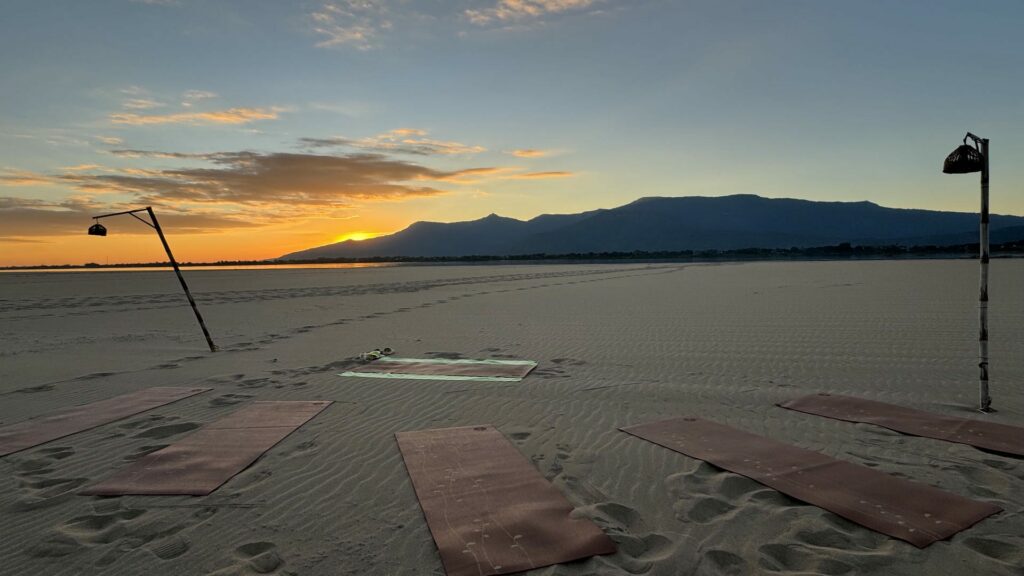
In the dry season, beaches appear. In the wet season, the water gently takes them back. The island grows and shrinks with the river. It’s never quite the same shape twice.
When the Water Came Higher
In 2019, the Mekong rose to levels no one had seen in decades.
Some paths vanished. A few homes were evacuated. The bicycle loop became a boat route. We delivered noodles by canoe. Families helped each other. No panic, just adaptation — something island life teaches you over time.
Eventually, the water gave back what it had borrowed.
The Quiet Forest No One Talks About
Far from the houses and rice fields, on the other side of the island, there’s a stretch of community forest.
No signs. No viewing platforms. Just trees, birds, insects, and the kind of silence that doesn’t feel empty.
If you want to hear nature in its own language, go there early in the morning. It’s generous with birdsong.
Speaking of Birds
We actually made a poster once — full of the island’s birds. At first just for fun, then out of love. You can find it online now at dondengisland.com, along with other little bits we’ve gathered about this place over the years.
We noticed no one else was writing it down. So we started.
When the Guidebook Forgot Us
One day, we noticed something missing. A certain well-known guidebook had quietly dropped Don Daeng from its pages.
We didn’t get upset. But travelers were arriving with less information. Homestays weren’t being found. Phone numbers were out of date. The island hadn’t disappeared — just the tools to find it.
So we made a website. We added contacts, locations, little notes. And the visitors came. Not in crowds, but enough. Enough for things to flow again.
Not the Four Thousand Islands — And That’s Fine
People often compare Don Daeng to the Four Thousand Islands. They’re beautiful, of course. But this is a different story.
Here, life is quieter. More local. Less curated. The island breathes on its own schedule, whether there are visitors or not. There are no party bars, and no one’s selling tubing trips.
And we’re much closer to Pakse — just about half an hour away.
Surprisingly Easy to Reach
Coming from Pakse? Easy.
On your way to or from the Four Thousand Islands? Easier still.
Stop near Ban Muang (around KM 30), and hop on a boat. We can arrange it, or you can ask a local boatman. No big plans needed.
Ten minutes later, you’re here.
Stay in a homestay. Stay with us. Explore. Or don’t. That’s up to you.
Change Happens Slowly Here
The island has changed, but gently.
Electricity arrived. Then internet. A few more boats, a few more visitors. But the rhythm stayed the same. Kids cycle to school. Rice is planted. People chat in the shade.
We’re not in a hurry to become something else. We’re happy just being Don Daeng.
And if you feel it too, we probably don’t need to say much more.